

Answer capsule: A System Reset immersive wellness workshop is a five-hour, guided experience that moves through breathwork, meditation, sound, somatic movement, and integration. Participants learn through direct practice rather than observation, with time to adjust intensity, pause when needed, and reflect on how the experience may inform everyday regulation.
The format is designed for people who want more than a short class but do not want a retreat commitment. Upper Aeon's approach brings nervous system education into a structured, embodied setting. The following guide explains the participant journey without promising a cure, a guaranteed emotional release, or a single outcome for every body.
SECURE YOUR SPOT NOW for the next Upper Aeon immersive experience.
What Is the System Reset Experience?
The System Reset Experience is Upper Aeon's five-hour immersive workshop combining education with live, body-based practice. Its published structure includes breathwork, meditation, sound, movement, and practical integration. The event is not presented here as medical care. It is a facilitated wellness experience where participants can explore attention, breath, sensation, movement, and reflection.
Upper Aeon describes System Reset as a bridge between nervous system science, biohacking, and embodied practice. That positioning matters because the session is not a lecture followed by optional homework. The educational material is paired with guided participation, so the person attending has an active role in the process.
The workshop can be understood as a sequence of state changes rather than a checklist of techniques. Some sections may feel activating, others quiet, and others social or reflective. A skilled facilitator should make room for individual differences, clear instructions, consent, and pauses. Participants remain responsible for choosing a level of participation that feels appropriate.
The Five Stages of a System Reset Workshop
A five-hour System Reset workshop follows five connected stages: Release and Restore, Rewire and Reset, Breathe and Breakthrough, Move and Transform, and Activate and Elevate. The names describe the intended arc of the experience, not guaranteed results. The exact pacing, facilitator, location, and program details can vary by event.
1. Release and Restore
The opening stage helps participants arrive, orient to the room, and establish a foundation for practice. Guidance may include breathing, attention to physical sensations, and an introduction to the session's boundaries. The goal is not to force relaxation. It is to help each person notice their starting point and make informed choices about intensity.
2. Rewire and Reset
This stage turns toward attention, thought patterns, and the relationship between interpretation and bodily response. Meditation and sound may be used to support a quieter, more focused environment. Research does not justify claiming that a single sound frequency rewires the brain or treats a condition, so the responsible framing is experiential: participants are invited to observe how the practice affects attention and felt experience.
3. Breathe and Breakthrough
Breathwork is often the most physically demanding section of an immersive workshop. The facilitator may guide changes in rhythm, depth, pauses, or attention. Slow breathing has documented effects on respiratory and cardiovascular measures in healthy people, including heart rate variability and cardiorespiratory coupling, according to Russo, Santarelli, and O'Rourke's review in The physiological effects of slow breathing in the healthy human.
Evidence still needs careful interpretation. A 2023 randomized, placebo-controlled trial of coherent breathing found no significant advantage over a matched breathing control for stress, anxiety, depression, or wellbeing after four weeks. That result does not make guided breathwork irrelevant, but it does mean a workshop should not promise that one protocol will reset every nervous system. Anyone with a health condition, pregnancy, a history of fainting, or concern about breath retention should seek appropriate professional guidance before participating.
EXPLORE THE SYSTEM RESET EXPERIENCE when you are ready to learn more about the live format.
4. Move and Transform
Somatic movement gives participants another route into awareness. The emphasis is not on athletic performance or choreographed perfection. It may involve gentle movement, intuitive motion, or more expressive dance, depending on the facilitator and event design. Participants can remain seated, reduce range of motion, or pause when a movement does not feel right.
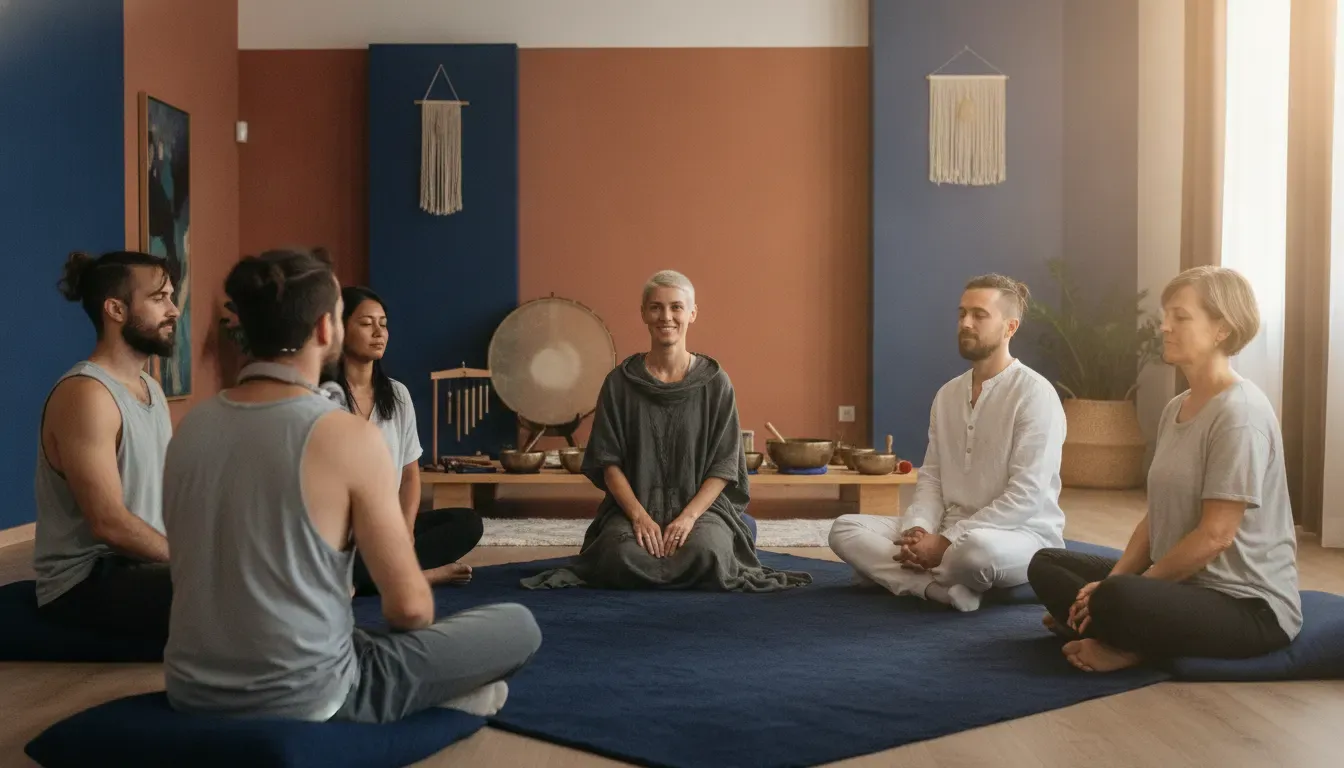
5. Activate and Elevate
The final active stage connects the practices to everyday choices. Upper Aeon's System Reset materials describe biohacking tools and practical self-regulation techniques as part of this wider arc. The useful question is not whether a device or ritual creates a permanent new state. It is whether the participant leaves with one or two realistic practices they can evaluate over time.
How the stages work together
The five stages create an arc from orientation to activation and then toward integration. They are not five isolated promises. Breathwork may alter attention, movement may change the way a person notices sensation, and stillness may create space for reflection. The value of the sequence is the opportunity to compare those experiences and decide what, if anything, belongs in daily life.
| Stage | Primary focus | Participant question |
|---|---|---|
| Release and Restore | Arrival, breath, and orientation | What is my starting state? |
| Rewire and Reset | Attention, meditation, and sound | What do I notice when stimulation changes? |
| Breathe and Breakthrough | Guided breathwork | How should I pace my participation? |
| Move and Transform | Somatic movement and expression | What feels supportive in my body? |
| Activate and Elevate | Tools, reflection, and application | What can I test responsibly afterward? |
Who Is the System Reset Experience Designed For?
The System Reset Experience may suit adults who want a structured introduction to breathwork, meditation, movement, sound, and nervous system education in a group setting. It can appeal to executives, entrepreneurs, biohackers, wellness practitioners, and curious participants who value both modern science and embodied practice. Interest alone is not a substitute for a personal safety assessment.
The workshop is a stronger fit when you can set aside the full session, follow instructions, and accept that your experience may differ from someone else's. It is less suitable when you need a clinical diagnosis, individualized psychotherapy, emergency mental health support, or a guaranteed result. A wellness workshop can complement personal practices, but it should not replace care from a qualified clinician.
What to bring and how to prepare
- Protect the time: Plan for the full five-hour container, including arrival and closing integration.
- Choose comfortable clothing: Wear layers that allow breathing, lying down, sitting, and easy movement.
- Bring floor support: A yoga mat, blanket, cushion, or other soft support can make stillness more comfortable.
- Eat and hydrate sensibly: Follow the event's instructions and avoid arriving depleted or uncomfortably full.
- Set a personal intention: Choose an observation or skill to explore rather than demanding a specific emotional outcome.
- Plan the transition home: Leave room for a quiet period after the workshop instead of scheduling an immediate high-pressure obligation.
Before attending, read the event's current safety guidance and ask the organizer any unanswered questions. If a practice includes forceful breathing, prolonged breath holds, intense movement, or altered sensory input, you should know how to pause or opt out. Consent includes changing your mind during the session.
For a broader explanation of regulation as flexible movement between activation, recovery, and connection, read Upper Aeon's science-backed guide to nervous system regulation. That article provides the wider educational context; this workshop guide focuses on how the live experience is structured.
What Participants Say: Outcomes and Testimonials
Participant accounts can show how a workshop felt to specific people, but testimonials are not clinical evidence and cannot predict another person's outcome. Upper Aeon publishes accounts describing clarity, emotional release, altered states, and repeated attendance. Those reports belong in the category of personal experience, not universal promises about healing or nervous system change.
For example, biochemist and author Shawn Wells is quoted by Upper Aeon as saying that each System Reset experience deepened his sense of healing and clarity. Entrepreneur Peter Thiemann describes an intense breathwork experience during stages three and four. These statements help a prospective attendee understand the range of experiences people report, while also showing why preparation, pacing, and post-session support matter.
A more useful outcome framework is personal and observable. After the workshop, you might record your energy, mood, sleep quality, focus, and stress response without assuming that any change came from the workshop alone. Compare the observation with your normal baseline over several days. If distress persists or worsens, seek qualified support rather than trying to repeat an intense practice as self-treatment.
Sound is another area where restraint matters. A systematic review and meta-analysis of experimental studies in healthy adults found no statistically significant overall effect of music listening on short-term stress recovery, with results varying by musical characteristics and outcome. The finding supports an honest position: sound can shape an environment and personal experience, but no universal result should be promised. See the review in Music listening and stress recovery in healthy individuals.
Upcoming System Reset Events: How to Secure Your Spot
Dates, venues, access instructions, and availability change as Upper Aeon schedules its global experiences. Use the current System Reset Experience page for the details that belong to a booking decision, then return to this guide to prepare for the participant journey. A registration page, rather than an evergreen blog post, is the source of truth for the next available session.
Upper Aeon also develops in-person experiences for teams, events, and private groups. A private or corporate workshop may use related principles while changing the duration, learning objectives, group size, and level of customization. Do not assume that a bespoke program has the same agenda as the public System Reset format.
If a five-hour live container is not the right fit, Upper Aeon's on-demand breathwork, dance, and meditation library offers a different way to explore related practices. Self-guided content can be easier to schedule, while a live workshop offers real-time facilitation and group participation. The better choice depends on your goals, schedule, comfort, and need for support.
VIEW CURRENT EVENT DETAILS and choose the format that matches your readiness.
Frequently Asked Questions
Is System Reset a therapy session?
No. System Reset is described as an immersive wellness and education experience, not a substitute for psychotherapy, medical treatment, or emergency support. Participants should use personal judgment, follow safety guidance, and consult a qualified professional when health questions or symptoms require individualized care.
What happens during a five-hour immersive wellness workshop?
A five-hour immersive wellness workshop typically uses a sequence of education and direct practice. In Upper Aeon's System Reset format, the published arc includes breathwork, meditation, sound, somatic movement, biohacking-informed tools, and closing integration. The exact schedule and practices can vary by event and facilitator.
Do I need breathwork experience to attend?
Previous experience is not presented as a requirement for the general System Reset format, but participants should read the current event guidance and ask questions before attending. Follow the facilitator's pacing, pause when needed, and disclose relevant health concerns through the appropriate organizer process.
Can I participate at a lower intensity?
Responsible participation includes modifying, pausing, or opting out of a practice when needed. Ask the facilitator about alternatives before the session begins. No workshop should require you to override pain, dizziness, panic, breathlessness, or another signal that you need to stop and seek support.
How should I integrate the experience afterward?
Keep the rest of the day spacious if possible, write down observations without turning them into conclusions, hydrate and eat normally, and choose one modest practice to evaluate. Integration is not proof that a permanent change occurred. Seek qualified help if strong or persistent distress follows the session.
JOIN THE EARTH 2.0 COMMUNITY to continue exploring embodied practice with Upper Aeon.
Ready to explore the next System Reset Experience? SECURE YOUR PLACE and review the current event details first.